

Raw vs Steam (Parboiled) Sona Masuri Rice: What Is the Difference?

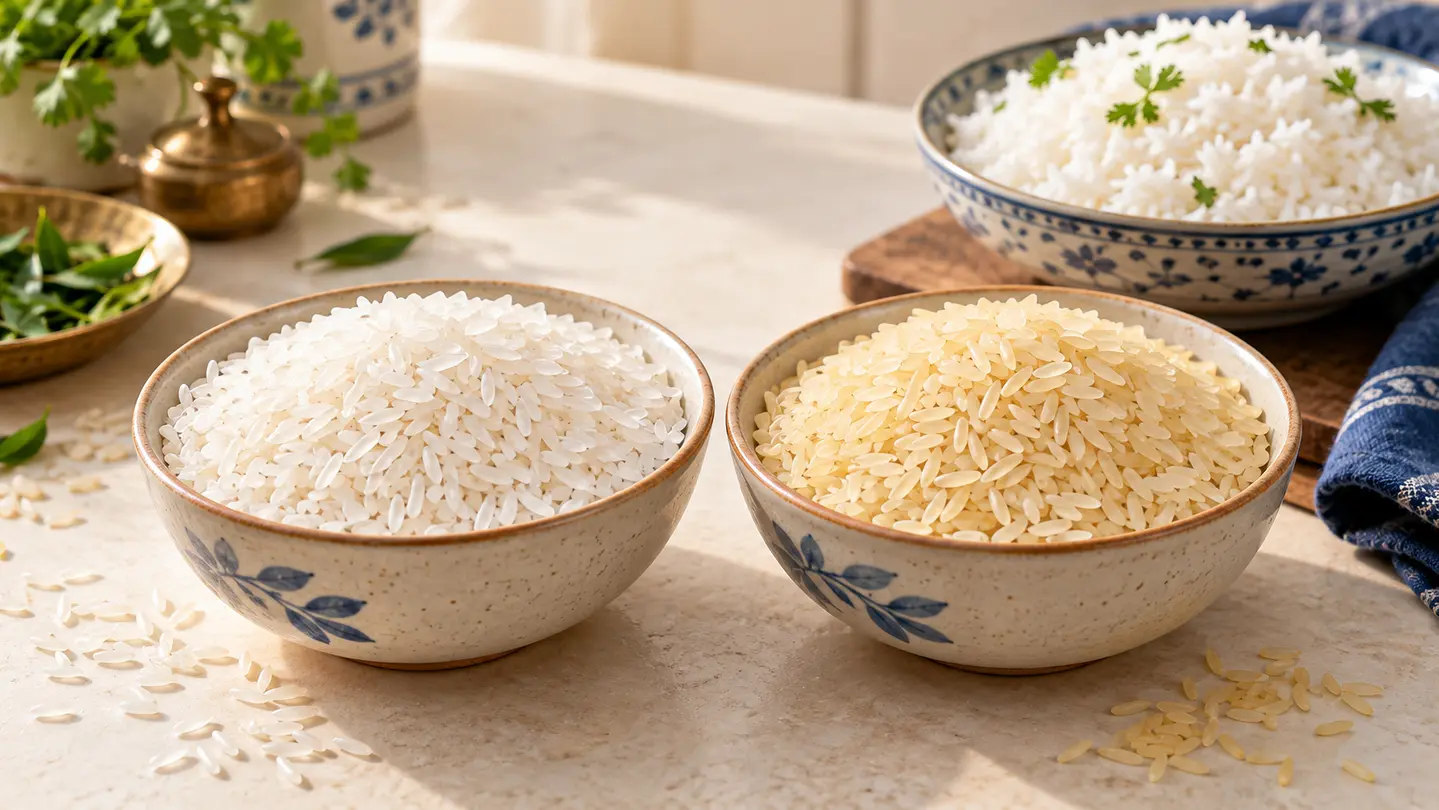
Illustration of grain colour, not to scale.
What “steam” rice means
Steam rice is also called parboiled rice. The paddy is soaked and steamed before it is milled. This changes how the grain behaves when cooked, which is why steam rice tends to stay firmer and separate. Raw rice is milled without that step.
Raw
Soft and light
- Texture
- Soft, fluffy
- Good with
- Dal, sambar, curd rice, pongal
- Our listings
- Sona Masuri Grand Old Raw, Old Raw
Steam (parboiled)
Firm and separate
- Texture
- Firmer, separate grains
- Good with
- Gravies, curry, rice that needs to hold shape
- Our listings
- Old Ponni Steam, New Ponni Steam
How to choose
- Prefer softer, lighter rice: choose raw.
- Prefer firm, separate grains: choose steam.
- Cooking for a family with mixed tastes: keep one bag of each and mix by dish.
Cooking each one
Rinse 2–3 times and soak for 20 minutes. In a pressure or electric cooker, start with 3 cups water to 1 cup rice, then adjust on your next batch to suit your taste. Let it rest for 15 minutes before serving. Cooker times vary, so use your own cooker’s instructions as a guide.
Age matters too
Our raw and steam listings show the age of the rice currently offered, for example 18+ months for Grand Old Raw and 9+ months for the steam varieties. Aged rice cooks fluffy and non-sticky.
Quality
Every Kitchen King® batch is Sortex cleaned, hygienically packed, and cooked and checked before it leaves our mill in Ballari. Best before 2 years from packaging.
Where to buy
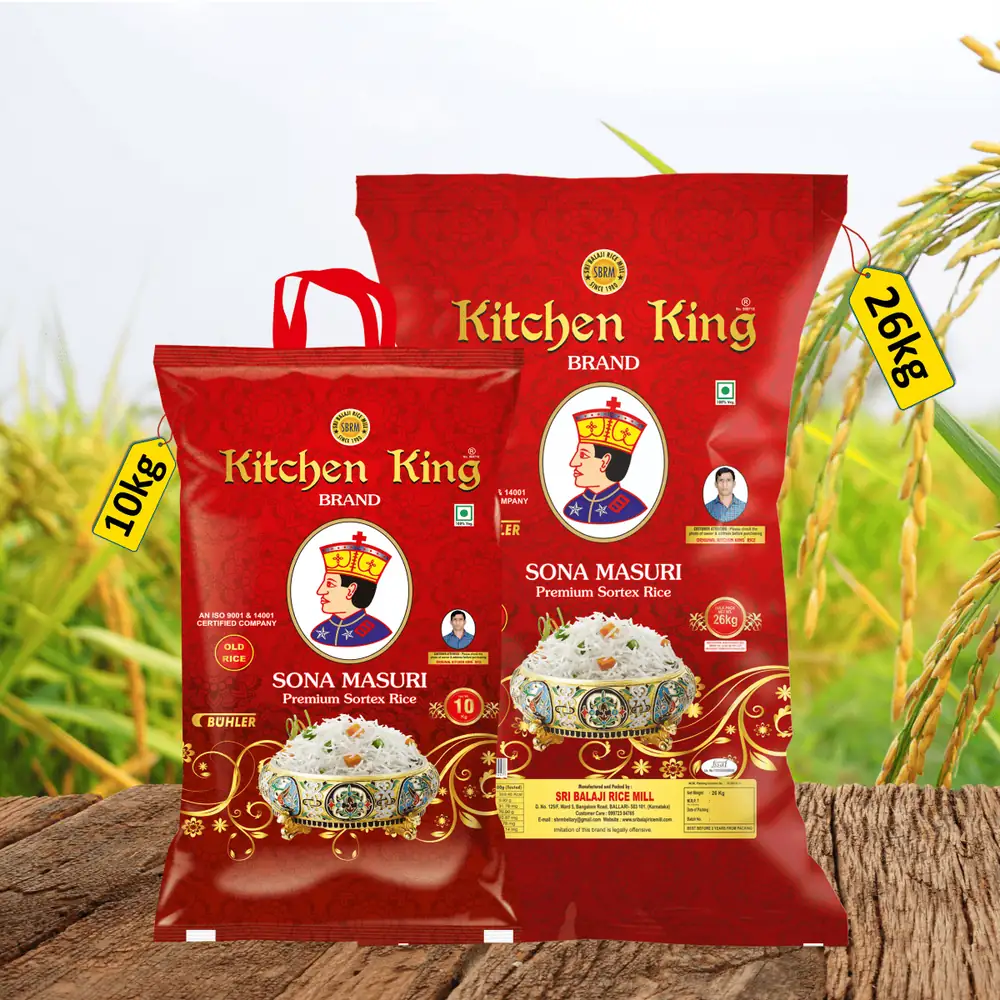
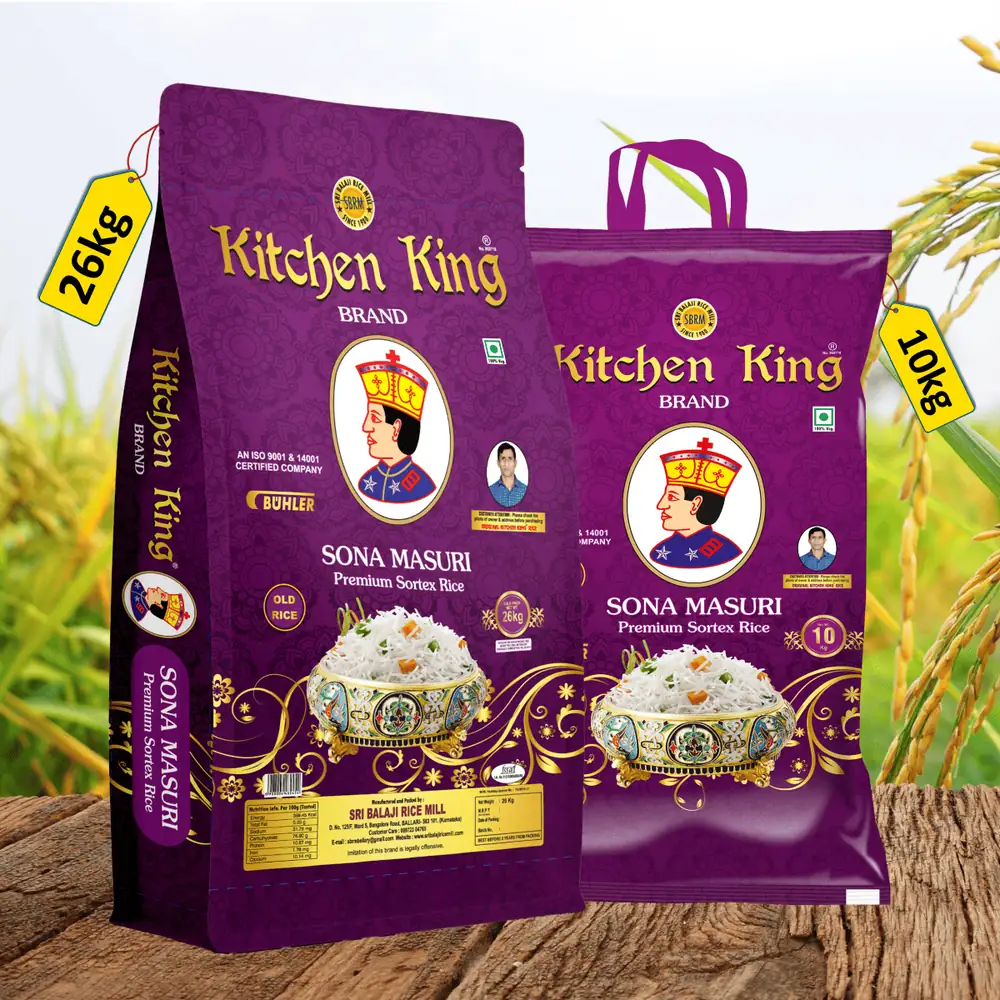
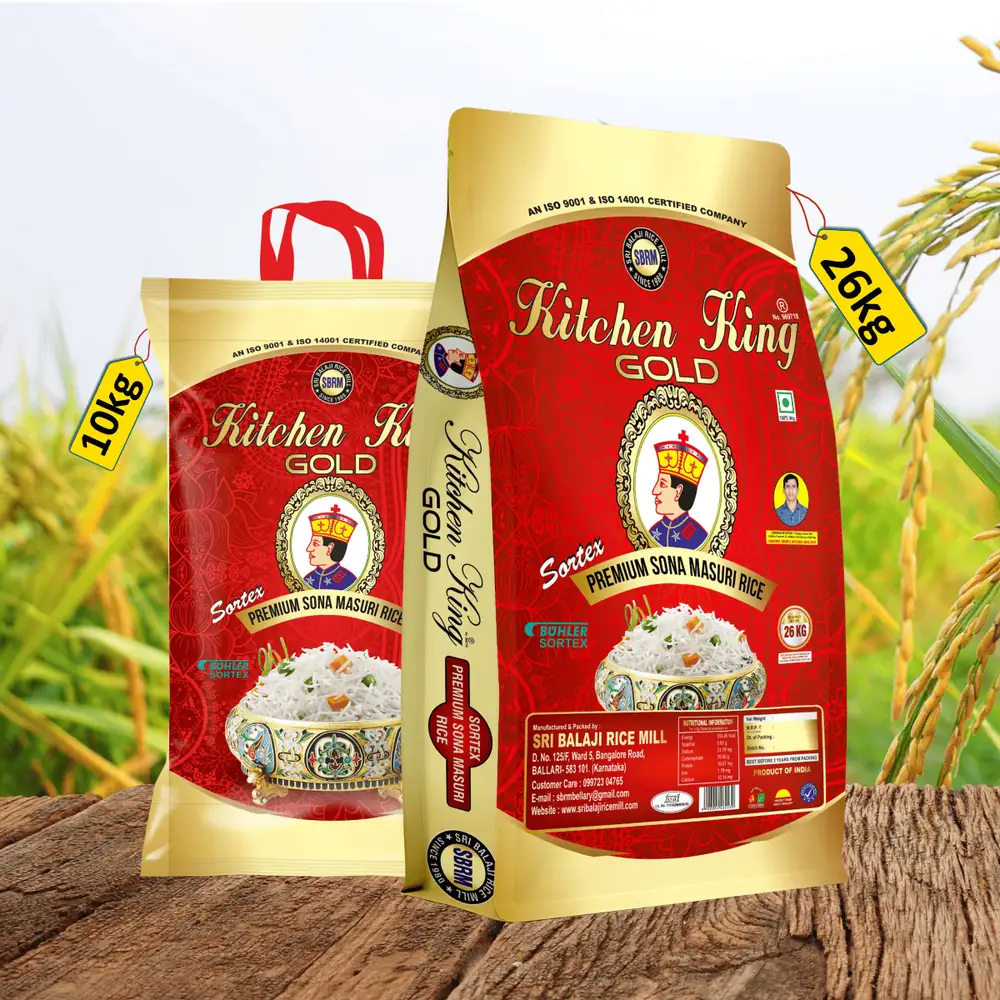
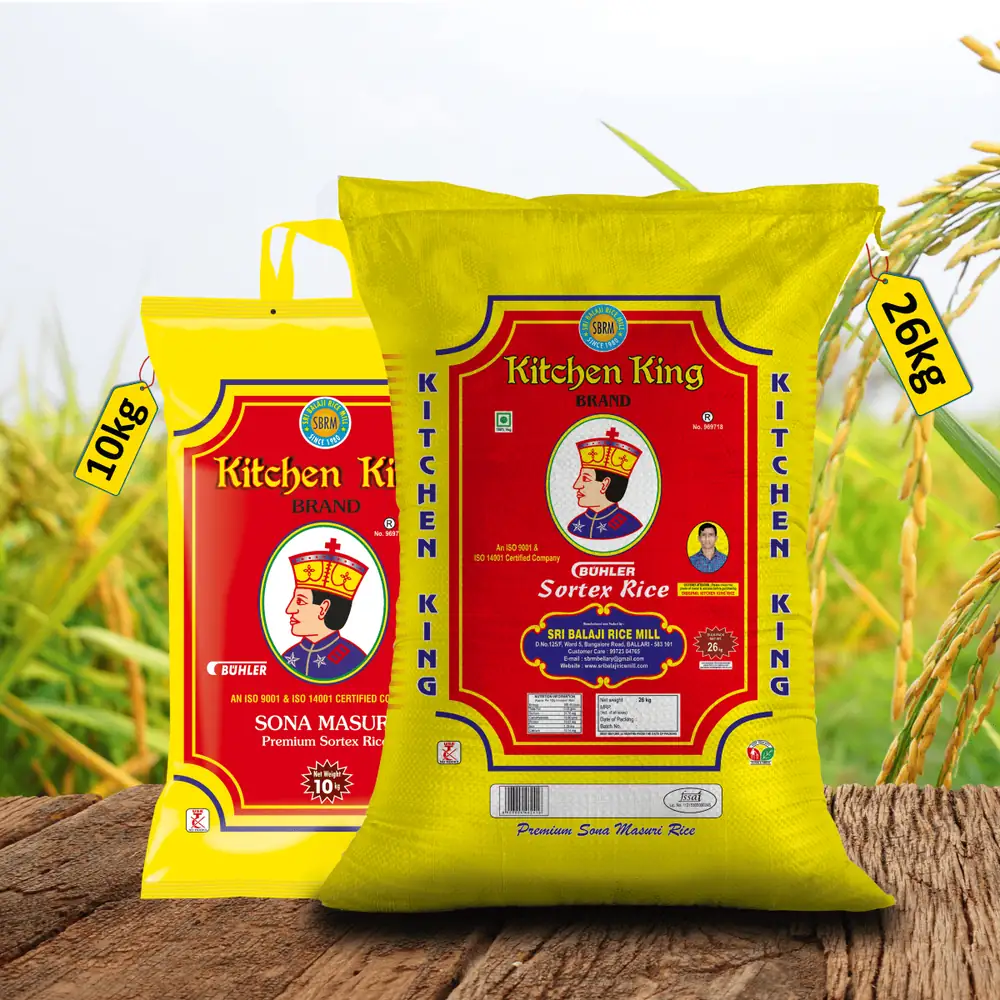
10 kg and 26 kg bags, home delivery across Bengaluru in 1–3 days, or a free sample pouch at our Shanthinagar outlet.
See every variety on our Compare page, or read Sona Masuri vs Jeera Sona.
Shop Kitchen King® rice